
Sage Schwarz · 17 October 2026
Uncovering Interconnections Between Faceted Navigation Adjustments and Long-Term Indexation Stability in Complex Retail Sites
Complex retail sites rely on faceted navigation systems to help users narrow product selections through attributes such as size, color, price range, and brand, yet these same systems generate vast numbers of URL combinations that search engines must evaluate over extended periods. Researchers have documented how adjustments to these filters alter crawl patterns, duplicate content signals, and ultimately the stability of indexed pages across months or years. Data from large e-commerce platforms indicates that even minor filter modifications can shift how many parameter combinations receive consistent attention from indexing systems.
Mechanics of Faceted Navigation and URL Generation
Retail platforms construct faceted URLs by appending query parameters or path segments each time a user applies a filter, which creates exponential growth in addressable pages when multiple attributes combine. Observers note that sites with thousands of products often produce millions of potential faceted combinations, forcing search engines to allocate limited crawl resources across both valuable category pages and low-value filter permutations. Studies from academic institutions in Canada have shown that without careful parameter handling, these combinations compete for indexing priority and can dilute signals that support long-term stability of core product and category URLs.
Effects of Filter Adjustments on Crawl Budget Allocation
When retail teams add or remove facets, the resulting changes modify which URLs appear in sitemaps and internal link structures, which in turn influences how frequently crawlers revisit existing indexed pages. Evidence from multiple enterprise sites reveals that introducing a new price-range filter, for instance, can suddenly surface thousands of additional URLs that require evaluation, thereby reducing the frequency of visits to previously stable product detail pages. Those who monitor server logs report corresponding drops in indexation rates for canonical URLs when faceted combinations expand without corresponding noindex or canonical directives.
Long-Term Indexation Patterns Following Navigation Changes
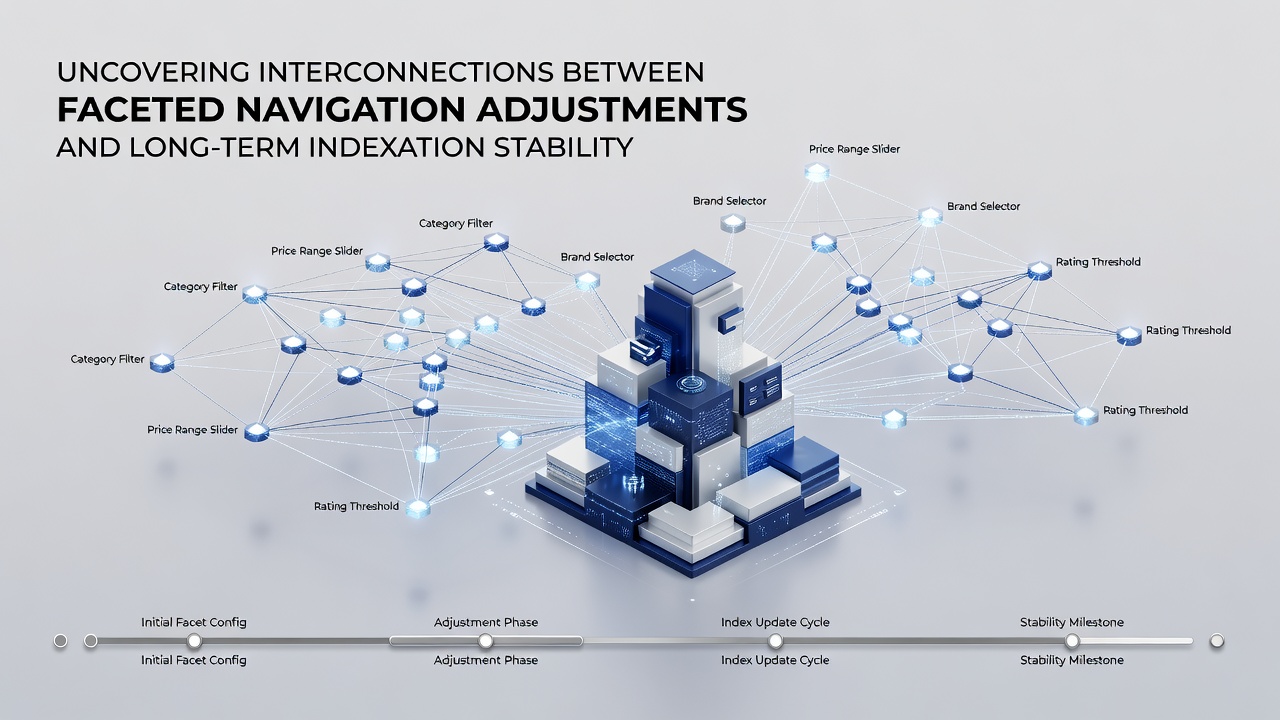
Longitudinal analysis of retail sites demonstrates that indexation stability erodes when faceted adjustments occur repeatedly without coordinated updates to robots directives or parameter handling rules. In October 2026, figures released by the Australian Competition and Consumer Commission highlighted how several major retailers experienced gradual declines in indexed page counts after successive filter refinements aimed at improving user experience. These declines often emerged months after the initial changes, suggesting that indexing systems require sustained observation periods to rebalance their evaluation of faceted versus canonical content.
Retail teams that implement parameter consolidation techniques, such as rewriting faceted URLs into static paths or limiting the number of active filters per page, have recorded more consistent indexing of primary content categories. Research indicates that such consolidations reduce the total addressable URL surface while preserving the functional benefits of faceted navigation for visitors, which supports steadier indexation metrics over multi-year horizons.
Case Examples from Enterprise Retail Platforms
One documented retail deployment involved the phased removal of low-priority color and material filters across a catalog exceeding 200,000 SKUs, which produced measurable improvements in crawl frequency for core category pages within six months. Another case tracked the addition of dynamic price filters during a promotional period and recorded temporary spikes in duplicate content flags that resolved only after canonical tags were uniformly applied to all generated combinations. These examples illustrate how the timing and scope of faceted adjustments correlate with indexation outcomes rather than isolated filter counts alone.
Conclusion
Adjustments to faceted navigation systems in complex retail environments directly influence the crawl paths, duplicate content signals, and long-term indexation stability of large-scale sites. Coordinated management of filter parameters, combined with ongoing monitoring of indexing metrics, allows retail operators to maintain functional navigation while preserving consistent search engine coverage of essential pages. Continued observation through 2026 and beyond will likely refine understanding of these interconnections as indexing algorithms evolve in response to increasingly sophisticated e-commerce architectures.